
Marine Dredging Insurance: Understanding the Risks of Dredging Operations
October 20, 2026
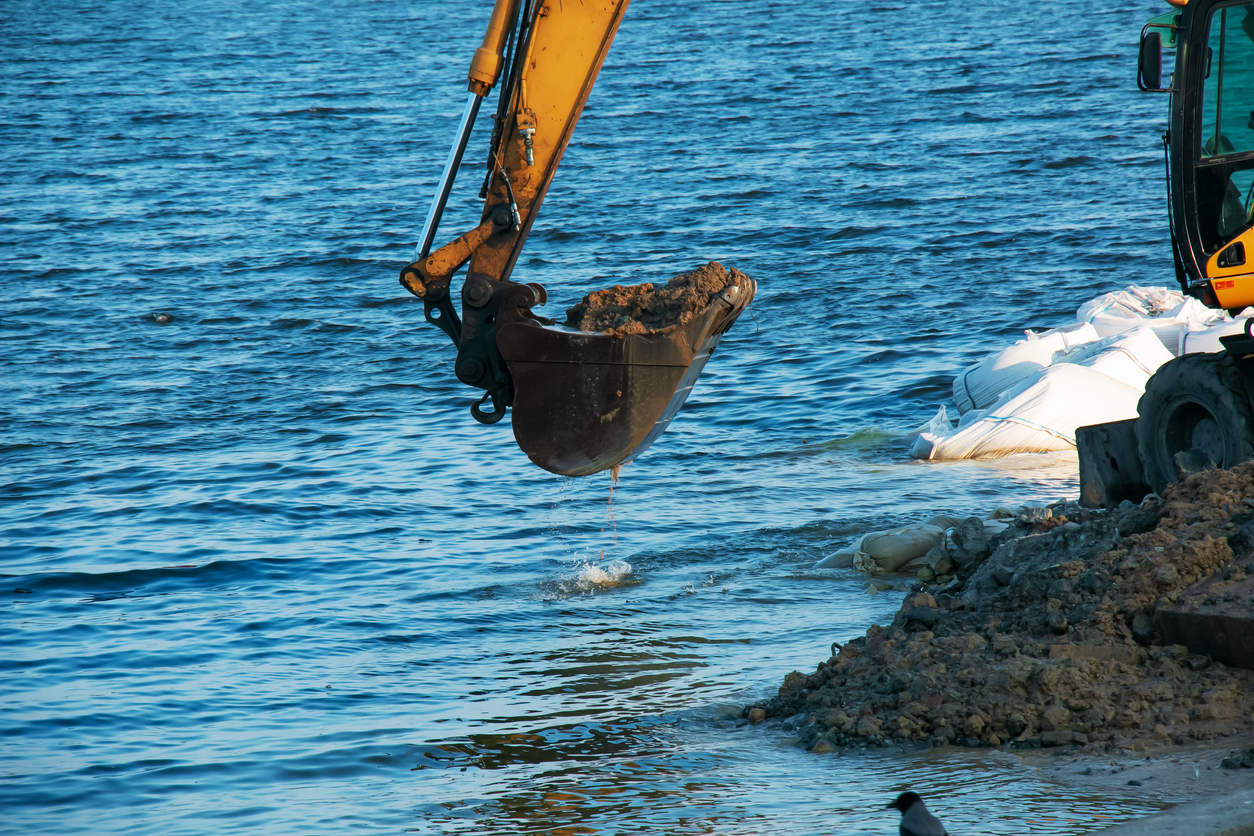
On paper, a dredging project can look like an excavation job. In practice, the contractor may operate a dredge and support vessels, move large volumes of sediment through pipelines or onto barges, and put crews on deck and along the shoreline — and often do all of it simultaneously inside a working navigable waterway. Once you understand how the operation works, you’ll know how to evaluate your client’s marine dredging insurance needs.
What Makes Dredging Operations Different From Other Contracting Work?
Dredging poses a wide range of risks on dry land and in the water. The work combines excavation with marine operations, often involving dredges, barges, vessels, pumps, pipelines, cranes, and other specialized equipment.
For instance, dredged-material handling can introduce environmental and regulatory responsibilities. Discharging dredged material into U.S. waters generally requires a permit under Section 404 of the Clean Water Act. Transporting it for ocean disposal falls under Marine Protection, Research, and Sanctuaries Act permits, which the U.S. Army Corps of Engineers issues with review by the Environmental Protection Agency.
Agents should know where a client’s dredged material goes and how it gets there, because handling and transport are part of the operation.
Where Can One Dredging Incident Create Multiple Exposures?
Let’s say that a contractor performs maintenance dredging in a marina basin. A hydraulic line on the dredge fails, and the operator loses control of the swing. The dredge strikes a section of floating dock and damages two moored boats. Hydraulic fluid escapes into the water. The marina halts work, and for the next several days or weeks, the contractor repairs the dredge, cleans up the release, and repositions its pipeline.
That’s one event with several potential issues:
- Equipment: Damage to the dredge’s components may fall under contractors equipment coverage with waterborne coverage, depending on how the policy schedules and classifies the dredge.
- Third-party property: Damage to the dock and the moored boats raises questions for marine general liability or marine contractors liability.
- Vessel exposures: If the dredge or a support craft qualifies as a vessel, commercial hull and protection and indemnity (P&I) coverage may address physical damage and the owner’s legal liability.
- Pollution: The fluid release and cleanup may call for pollution coverage, since many liability forms limit or exclude pollution.
- Disruption: The work stoppage may lead to schedule delays, contract disputes, or added costs that agents should review with the client.
A single dredging incident can involve equipment damage, marine liability, and pollution exposures, creating a chain reaction that affects multiple policies. Agents need to understand the client’s entire operation to evaluate how these coverages work together.
How Do Crew Duties and Work Locations Affect Coverage?
Dredging crews perform different jobs in different environments. Some employees live and work aboard the dredge for extended periods. Pipeline crews may move between barges and the shoreline, while equipment operators at placement sites may work entirely on land.
An employee’s duties and work location can affect which laws govern a workplace injury. Depending on the circumstances, coverage may fall under state workers’ compensation, the Longshore and Harbor Workers’ Compensation Act, or maritime law, including the Jones Act. Different requirements may apply to employees working on the same project.
Agents should review where employees work, what they do, and whether their responsibilities change between projects. These details help determine which employee injury exposures need to be addressed in the contractor’s insurance program.
Match Marine Dredging Insurance to the Operation
Dredging brings together equipment, marine liability, vessels, crews, pollution, and waterborne work in ways that can overlap during a single project. A contractor’s coverage needs depend on its operations, equipment, vessels, employees, contracts, and policy terms, so no single template fits every dredger.
Before evaluating a client’s marine dredging insurance, get a clear picture of what the contractor does, where the work takes place, which equipment and vessels it uses, and who performs the work.
Merrimac Marine Insurance works with agents to build insurance programs for marine contractors, including dredging operations. Contact us to discuss coverage for your marine contractor clients.
About Merrimac Marine Insurance
At Merrimac Marine, we are dedicated to providing insurance for the marine industry to protect your clients’ businesses and assets. For more information about our products and programs, contact our specialists today at (800) 681-1998.