
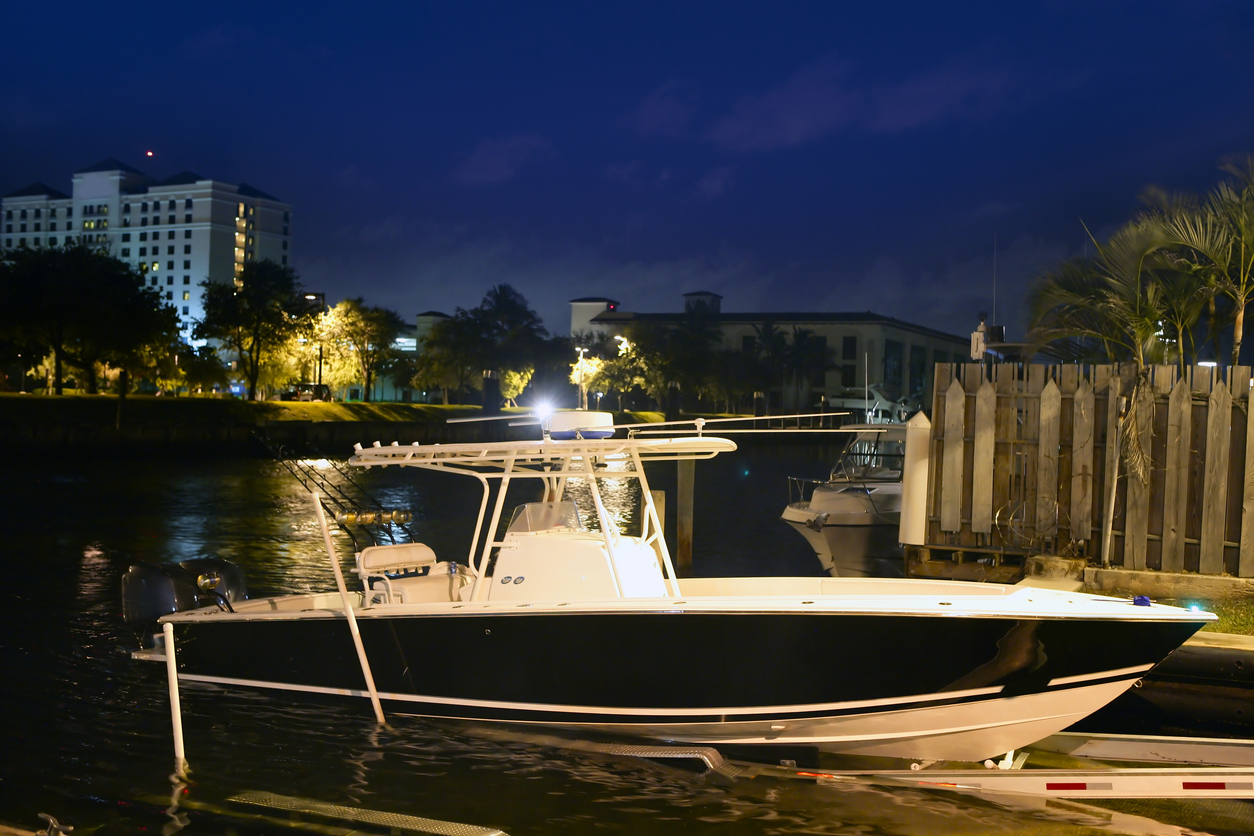
What Happens When Rental Boats Are Returned Damaged Outside Staffed Hours?
August 20, 2026
The hardest rental boat claims aren’t always the ones with the worst damage. In many cases, they’re the ones where nobody can say with confidence when the damage occurred. That’s one of the many reasons why commercial boat rental insurance can be a life preserver for a boat rental business. Unlike a cookie-cutter insurance policy, it can cut through the fog of uncertainty that often accompanies a claim.
Confusion particularly arises when a vessel reaches the dock after the crew has gone home or when the rental model leaves the boat in the renter’s custody overnight. The timeline is uncertain, custody is ambiguous, the inspection occurred hours later, and the documented condition of the boat has a gap — all before an investigation begins.
Delayed Returns Complicate Timelines
A boat that comes back with no one to receive it presents unique challenges. No staff member sees it come in, no one walks the hull with the customer, and no one records the time. When damage surfaces the next morning, three questions become difficult to answer: When did it occur, when did responsibility shift back to the operator, and what condition was the vessel in at the moment of return?
Few operators allow unattended returns. Daily rental agreements typically require check-in and check-out during daylight hours and impose late fees. Yet the gap still opens, usually in one of the following ways:
- A renter who runs late and ties up after the dock crew leaves
- A charter that returns the evening before a next-morning inspection
- A club or membership fleet where members return to a slip with no dock staff present
Picture a pontoon due back at 5 p.m. that reaches the slip closer to dusk, after the turnaround is finished and the dock crew has gone. Staff arrive the next morning and find a gouged starboard hull. The renter says it was fine when they tied up — and may well be telling the truth. Staff found it damaged, however.
In between sits an unobserved overnight period in which wind, wake, or another party’s vessel could plausibly have come in contact with it. There is an incomplete record of what occurred, which complicates documentation, investigation, and any evaluation of the exposure. Timing questions frequently end up as central to understanding the loss as the damage estimate itself.
Documentation Supports Better Reviews
Documentation often solves the mystery of what happened to a boat damaged during a return no one witnessed. Consistent pre-departure inspections, timestamped photographs, written condition reports, return logs, and rental agreements that clearly spell out responsibilities together establish a record of custody throughout the entire rental. Operators who already understand the risks of renting out boats tend to have these procedures in place.
Commercial boat rental insurance conversations should cover how a client documents the vessel’s condition at departure, at return, and specifically when a return arrives outside staffed hours. Documentation quality shapes risk evaluation, although no record guarantees how a particular loss will be resolved.
Operations Influence Claim Complexity
Late and unattended returns are ultimately an operational exposure. Unattended return slips, key-drop boxes, staffing that ends at sunset, delayed morning inspections, and vague customer reporting expectations all affect how cleanly a loss can be evaluated.
Nearly every daily rental operation already works to close this window. Renters are expected off the water before dark, boats are required to be tied up by sunset, and night navigation is off the table.
What separates one account from another is what happens when a renter misses the deadline anyway — whether someone stays to receive the boat, whether the inspection waits until morning, and whether anyone records the time of arrival. Multi-day and charter accounts fall into a different category because the overnight gap is built into the product rather than being an exception.
Stronger Return Procedures Matter
Late returns and overnight custody introduce uncertainty through documentation, timing, and workflow — not simply through the existence of damage. Here are four questions agents reviewing these accounts should ask their clients:
- How does this client handle returns that arrive after the dock crew has left, and does the rental model include multi-day or overnight custody?
- Are inspections, photographs, and condition reports completed consistently before and after every rental?
- Do rental agreements clearly establish return expectations and damage reporting procedures?
- Does the coverage review reflect how vessels are actually returned, inspected, and documented — not how the process is described on paper?
Return procedures, documentation workflows, and day-to-day rental operations belong in the policy review, not in the first phone call after a loss. An agent who asks how a client handles a boat that arrives after the dock crew has gone — who inspects it, when, and what gets written down — learns more about the account than the application will capture.
Need help evaluating a boat rental account? Contact Merrimac Marine Insurance to discuss coverage for your boat rental clients.
About Merrimac Marine Insurance
At Merrimac Marine, we are dedicated to providing insurance for the marine industry to protect your clients’ businesses and assets. For more information about our products and programs, contact our specialists today at (800) 681-1998.